Choosing how to build your website is one of the most important decisions you’ll make for your online presence. With so many options available, it’s easy to get overwhelmed. Should you use a simple drag-and-drop builder? A powerful system like WordPress? Or should you build something completely custom from scratch?
To make sense of it all, let’s use an analogy: building a house. Each method offers a different level of control, cost, and effort, just like different approaches to construction.
At HimariDT, we’ll break down the three main paths to help you decide which one is the perfect fit for your project.
Website builders (Wix, Squarespace)
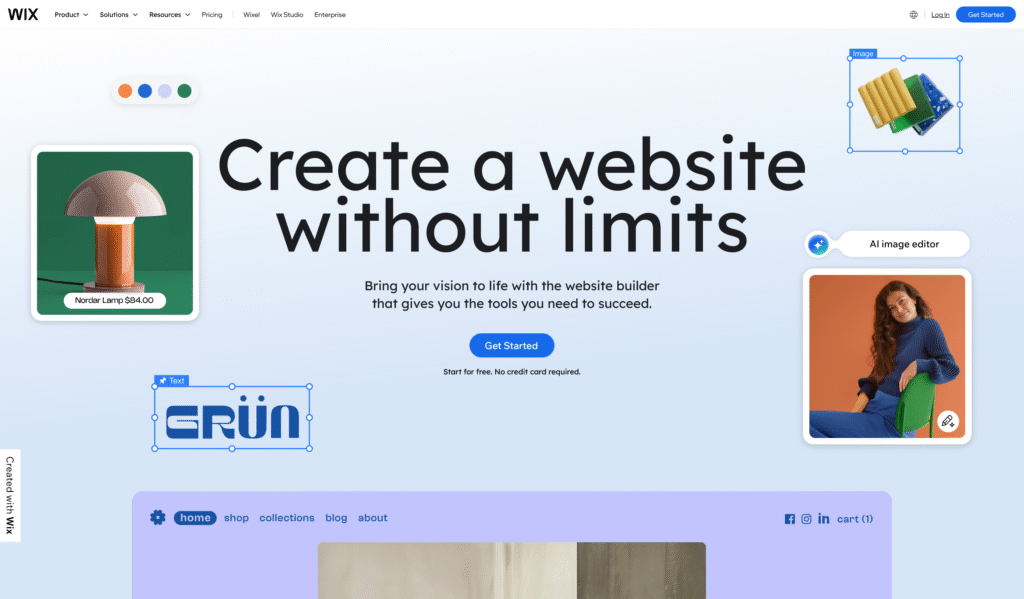
A website builder is an all-in-one platform that provides everything you need to get online quickly. It’s like renting a fully furnished, all-inclusive apartment in a managed complex.
These platforms offer a drag-and-drop visual editor, pre-made templates, web hosting, a domain name, security (SSL), and customer support, all bundled into one monthly fee. You never have to touch a line of code.
Pros:
- The learning curve is minimal. If you can use a word processor, you can build a site with Wix or Squarespace.
- You can go from sign-up to a beautiful, live website in just a few hours.
- The company handles all the technical maintenance, security, and updates for you.
Cons:
- You are playing in their sandbox. You can only use the features and designs they provide. Adding custom functionality is often impossible.
- Moving your website to another platform is extremely difficult, if not impossible. You don’t truly own the underlying structure.
- While easy to start, the monthly fees can add up, especially for e-commerce or advanced features.
Best for: Small businesses, artists, photographers, restaurants, and anyone who needs a simple, professional-looking website right now without any technical headaches.
WordPress
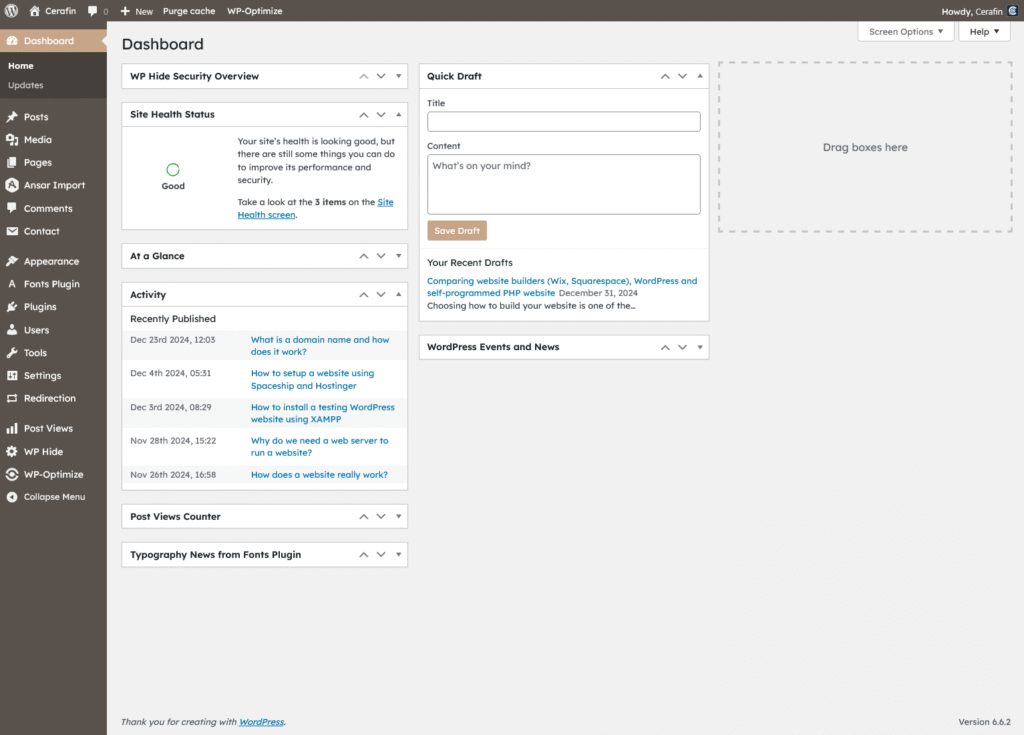
WordPress is a Content Management System (CMS). Specifically, we’re talking about self-hosted WordPress.org. This approach is like building a house using a high-quality, prefabricated kit.
WordPress provides the core foundation and structure for free. You then choose your own hosting (“the land”), install WordPress, and customize your site’s appearance and functionality using a vast library of themes (“the blueprint and design”) and plugins (“the appliances and extra features”).
Pros:
- With over 50,000 plugins and countless themes, you can build almost anything imaginable – a blog, an online store, a portfolio, a corporate site, etc.
- You own 100% of your website and its data. You can host it anywhere, modify the code, and move it to a new host whenever you want.
- As the world’s most popular CMS, there are endless free tutorials, forums, and developers available to help you.
Cons:
- It’s more complex than a website builder. You’ll need to learn your way around the dashboard, themes, and plugins.
- You need to handle your own hosting, security, backups, and software updates.
Best for: Bloggers, content creators, small and large businesses, e-commerce stores—essentially anyone who wants a powerful, scalable website that they truly own and can grow over time. It’s the most versatile option for most people.
Building a website from scratch
This is the most traditional and technical path. It’s like designing and building a completely custom house from the ground up.
You (or a developer you hire) write the website’s code line-by-line. This involves using languages like HTML for structure, CSS for style, JavaScript for interactivity, and a backend language like PHP to handle server-side logic and database interactions.
Pros:
- The only limit is your imagination and skill. You can build completely unique features and user experiences tailored precisely to your needs.
- The code is lean because you only write what’s necessary. This can result in incredibly fast and efficient websites.
- Your site won’t be weighed down by features or code from themes and plugins that you don’t use.
Cons:
- This is not for beginners. You must be a proficient developer or have the budget to hire one.
- Custom development takes significantly more time and money than any other option.
- Every single feature, from a simple contact form to a full content management system, must be built, secured, and maintained by you.
Tech startups, web applications (like social media sites or project management tools), and businesses with highly specialized requirements that off-the-shelf solutions cannot meet.
So, which path should you choose?
The right choice depends entirely on your goals, budget, and technical comfort level.
- Choose a website builder if your priority is speed and ease of use, and you need a beautiful, simple site without any technical fuss.
- Choose WordPress if you want a powerful, flexible, and scalable website that you truly own, and you’re willing to invest a little time in learning the ropes. This is the best choice for most projects.
- Choose a self-programmed website if you have a unique idea for a web application and possess the expert skills or financial resources required for custom development