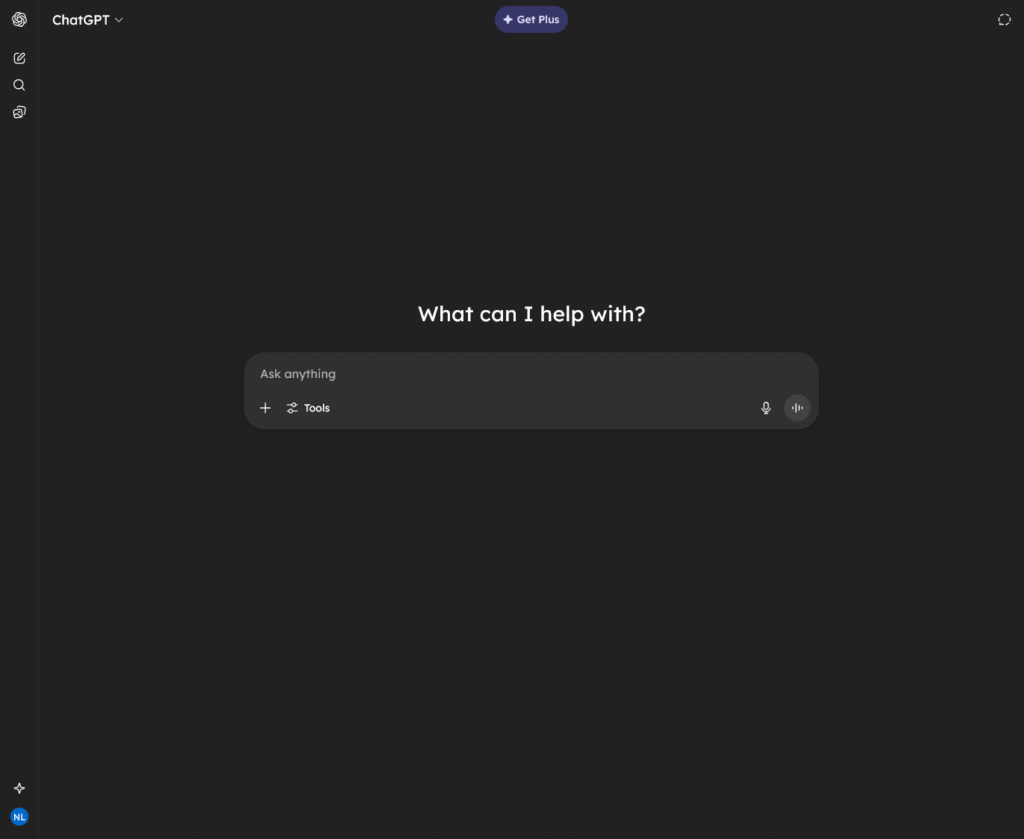
In the last few years, artificial intelligence has exploded from a niche concept into a daily reality for millions. At the heart of this revolution is a single technology: the Large Language Model (LLM). Tools like ChatGPT, Google’s Gemini, and Claude have changed the way we write, code, and even think, all thanks to the power of LLMs.
But what is an LLM? How does it actually work? It can feel like magic, but it’s not.
Welcome to HimariDT! Today, we’re pulling back the curtain to explain this groundbreaking technology in a way that anyone can understand.
What is a Large Language Model?
Let’s break down the name. At its core, an LLM is an incredibly sophisticated prediction machine.
- Large: This is no understatement. LLMs are “large” in two ways. First, they are trained on a colossal, almost incomprehensible amount of text data – a significant chunk of the public internet, digital books, Wikipedia, and more. Second, they have billions of internal “parameters”, which you can think of as tiny, adjustable knobs that are tuned during the training process to help the model make better predictions.
- Language: Their entire purpose is to understand, process, and generate human language. They work with words, sentences, and ideas.
- Model: This is a crucial distinction. An LLM is not a giant database or a search engine with a list of pre-written answers. It is a complex mathematical model of the patterns, relationships, and structures of language itself.
So, a Large Language Model is a massive AI trained to be an expert in the patterns of human language, allowing it to predict what should come next in any given text.
How do LLMs work?
Imagine a student locked in a library that contains every book and website in the world. Their teacher gives them a single, relentless task for years on end: predict the next word.
The teacher gives them a sentence fragment: “The cat sat on the…”
The student’s job is to guess the next word. The first few times, their guesses are random. “The cat sat on the… bicycle?” Wrong. “The cat sat on the… cloud?” Wrong.
But after seeing millions of examples, they start to learn patterns. They see that “mat”, “couch”, or “floor” are far more statistically likely to follow that phrase.
Now, scale this up infinitely. The LLM is the student, and its training data is the library. It performs this “predict the next word” task trillions of times. Over this immense training process, it doesn’t just learn simple phrases. It learns:
- Grammar and syntax: The rules of sentence structure.
- Facts and knowledge: It reads Wikipedia, so it learns that Paris is the capital of France.
- Context and nuance: It learns that “bank” means something different in “river bank” vs. “money in the bank”.
- Style: It learns the difference between a Shakespearean sonnet and a technical manual.
- Reasoning (in a statistical sense): It learns that if a user asks a question, the most probable sequence of words that follows is an answer.
How does ChatGPT actually answer your questions?
When you give ChatGPT a prompt, you are kicking off this incredibly powerful prediction process.
Let’s say you type: “Write a short, happy poem about a robot.”
- The LLM takes your entire prompt as its initial context.
- It doesn’t “think” of a whole poem at once. It begins by asking itself, “Based on the user’s request for a happy robot poem, what is the most statistically likely first word?” It might decide on “There”.
- It then appends that word to the context. The new context is: “Write a short, happy poem about a robot. There…” Now it asks again, “What’s the next most likely word?” Maybe “once”.
- It continues this process, word by word: “There once was a robot so bright…” Each new word is chosen based on the entire sequence that came before it. Because it has learned the patterns of poetry, it predicts words that rhyme and fit a certain meter. Because you asked for “happy”, it steers its predictions toward positive and cheerful language.
This lightning-fast chain of predictions, happening one word at a time, results in the coherent, contextually relevant, and often creative responses that feel so magical.
An LLM predicts, it doesn’t understand
This is the most critical concept to grasp about today’s LLMs. They are masters of mimicry and pattern recognition, but they do not possess consciousness, beliefs, or true understanding like a human does.
- Because an LLM’s goal is to generate a plausible-sounding sequence of words, it can sometimes “hallucinate” – making up facts, sources, or details that are completely wrong but sound correct. It’s not lying; it’s just predicting what it thinks should be there. Always fact-check important information you get from an LLM.
- The model is trained on a snapshot of the internet, which contains the full spectrum of human knowledge and biases. The LLM can inadvertently reflect and even amplify these societal biases in its responses.
- An LLM’s knowledge is frozen at the time its training was completed. It doesn’t know about events that happened after its training data was collected, which is why it might not know about very recent news.
Conclusion
A Large Language Model is not a person in a box; it’s a powerful reflection of the language we’ve used to document our world. By learning the patterns within trillions of words, tools like ChatGPT can act as powerful assistants, creative partners, and incredible learning aids.
Understanding that they are sophisticated prediction machines – not all-knowing oracles – is the key to using them effectively and responsibly. They are a new kind of tool, and we are all just beginning to learn what we can build with them.